
cdl a pre trip inspection pdf
CDL A Pre-Trip Inspection PDF: A Comprehensive Guide (2026)
Essential for CDL holders, this 2026 guide provides a downloadable PDF, ensuring DOT compliance and vehicle safety through a 161-point inspection process.
Understanding the CDL A pre-trip inspection is paramount for all commercial drivers. This isn’t merely a procedural formality; it’s a critical safety measure mandated by the FMCSA. A thorough inspection, documented via a checklist – often available as a downloadable PDF – safeguards the driver, other motorists, and the cargo.
The pre-trip process, as of 2026, involves a systematic examination of the vehicle, covering everything from in-cab controls to the exterior condition, air brake systems, and vital components like the alternator. Utilizing a comprehensive checklist, such as the 161-point version, ensures no detail is overlooked. This guide aims to equip drivers with the knowledge to confidently perform and document these inspections, promoting responsible and compliant operation.
Importance of a Thorough Inspection
Prioritizing a meticulous pre-trip inspection is non-negotiable for CDL drivers. Beyond legal compliance with FMCSA regulations, it directly impacts road safety. Identifying defects – from frayed wiring to excessive belt play – before operation prevents potential breakdowns and accidents. A downloadable CDL pre-trip inspection PDF serves as a vital tool, ensuring consistency and completeness.
Failing to conduct a thorough inspection can lead to costly repairs, delays, and, most importantly, jeopardize lives. A documented inspection report, completed accurately, demonstrates due diligence and protects the driver and company from liability. Utilizing a multi-point checklist, or the detailed 161-point version, minimizes risks and promotes a proactive safety culture.
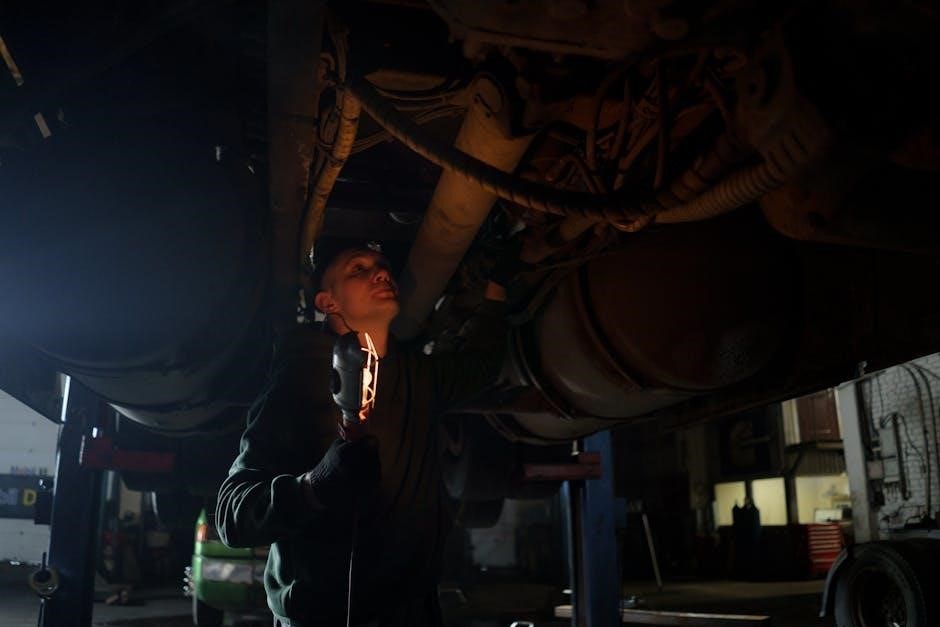
Vehicle Exterior Inspection
Focus on damage assessment, lights, reflectors, tires, and wheels; meticulously check the engine compartment, utilizing a CDL pre-trip PDF checklist for guidance.
Front of Vehicle – Damage Assessment

Begin your exterior inspection by thoroughly examining the front of the vehicle for any visible damage. This includes checking the hood, fenders, grille, and bumper for dents, cracks, or missing parts. Specifically, note any damage on your Inspection Report, as required for DOT compliance.
Inspect the windshield for cracks or chips that could obstruct the driver’s view. Ensure all lights – headlights, turn signals, and marker lights – are functioning correctly. Pay close attention to the license plate, verifying it’s securely attached and legible.
Remember to verbally state to the examiner that you are checking for damage and will document any findings. A comprehensive CDL pre-trip inspection PDF will guide you through these steps, ensuring no detail is overlooked, contributing to overall vehicle safety and adherence to FMCSA regulations.
Engine Compartment Checks
Carefully open the hood and begin inspecting the engine compartment. First, check the alternator, ensuring it’s securely mounted to the engine and that all wires are properly fastened, without any fraying. Next, examine belt or gear-driven components. The belt should have no more than ½ to ¾ of an inch of play and exhibit no cuts or cracks.

Look for cooling fins – their presence is crucial for proper engine temperature regulation. Verify fluid levels, including oil, coolant, and power steering fluid, noting any leaks or discrepancies. A detailed CDL pre-trip inspection PDF will illustrate these components and acceptable conditions.
Remember to verbally communicate your inspection process to the examiner, demonstrating your understanding of critical engine components and adherence to safety protocols. This thorough check contributes to preventing breakdowns and ensuring safe operation.
Alternator Inspection – Mounting & Wiring
During your engine compartment check, a critical step is the alternator inspection. Specifically, verify the alternator is securely mounted to the engine – any looseness could indicate a potential failure. Carefully examine all wiring connected to the alternator. Ensure the wires are properly fastened, showing no signs of corrosion, fraying, or damage.
A damaged wire can lead to electrical issues and potentially a vehicle shutdown. Refer to your CDL pre-trip inspection PDF for visual examples of acceptable and unacceptable wiring conditions. Communicate your findings to the examiner, stating whether the mounting is secure and the wiring is in good order.
This detailed inspection contributes to overall vehicle safety and prevents unexpected breakdowns during your trip. Remember, a proactive approach to maintenance is key for commercial drivers.
Belt/Gear Driven Components – Play & Condition
When inspecting belt or gear driven components, focus on both play and overall condition. For belts, check for excessive play – ideally, it should have no more than ½ to ¾ of an inch of movement. Also, meticulously inspect the belt for any signs of cuts, cracks, or fraying, which indicate wear and potential failure.
If gears are present, examine them for damage, wear, and proper lubrication. Look for any unusual noises or vibrations when the engine is running (if permitted during the inspection). Your CDL pre-trip inspection PDF should illustrate acceptable versus unacceptable component conditions.
Clearly articulate your findings to the examiner, noting the amount of play and any observed damage. Proper functioning of these components is vital for engine operation and vehicle safety.
Tire and Wheel Inspection
A thorough tire and wheel inspection is crucial for CDL pre-trip procedures. Begin by checking tire pressure with a gauge, ensuring it matches the manufacturer’s recommendations. Inspect tires for proper tread depth – minimum 4/32 inches – and any signs of damage like cuts, bulges, or uneven wear.
Next, examine the wheels for cracks, bends, or loose lug nuts. Verify that all lug nuts are present and tightened correctly. Look for any signs of welding repairs, which may compromise wheel integrity. Remember to inspect both sides of each tire and wheel.
Your CDL pre-trip inspection PDF will detail acceptable tire and wheel conditions. Document any discrepancies on your inspection report for immediate attention and repair.
Lights and Reflectors – Functionality Check
Confirm the proper operation of all lights and reflectors is a vital part of the CDL pre-trip inspection. Systematically check headlights (high and low beam), turn signals (left and right), brake lights, and hazard lights. Ensure each functions correctly from both the front and rear of the vehicle.
Inspect reflectors for cleanliness and damage; they must be clearly visible. Verify the presence and condition of marker lights and clearance lights, especially on trailers. Pay close attention to any auxiliary lights or warning lamps.
Your CDL pre-trip inspection PDF will guide you through this process. Document any malfunctioning lights or damaged reflectors on your inspection report immediately, as they pose a significant safety hazard.

Vehicle Interior Inspection
Thoroughly examine in-cab controls and safety features, verifying operational status; a complete CDL pre-trip PDF ensures driver and passenger wellbeing.
In-Cab Controls – Operational Verification
During the CDL pre-trip inspection, meticulously verify the functionality of all in-cab controls. This includes checking the steering wheel for excessive play, ensuring the horn operates correctly, and testing the windshield wipers and washers for proper function.
Inspect the operation of all mirrors, adjusting them as needed for optimal visibility. Confirm the proper functioning of the parking brake, applying and releasing it several times to ensure it holds securely.
Crucially, examine the seat adjustment mechanisms, confirming they lock into place. A comprehensive pre-trip PDF checklist will guide you through these steps, ensuring DOT compliance and a safe operating environment. Don’t forget to test the emergency flashers and any auxiliary controls.
Seat Adjustment and Safety Features
A vital component of the CDL pre-trip inspection focuses on seat adjustments and safety. Ensure the driver’s seat is adjustable to comfortably reach all controls – pedals, steering wheel, and instrumentation. Verify the locking mechanisms securely hold the seat in place after adjustment, preventing unwanted movement during operation.
Inspect the seatbelt for proper function, checking for fraying or damage. Confirm it latches securely and retracts smoothly. A pre-trip inspection PDF checklist will highlight these critical safety features.
Additionally, assess the condition of the headrest, ensuring it provides adequate support. Proper seat adjustment and functioning safety features are paramount for driver comfort, control, and, most importantly, safety during long hauls.

Air Brake System Inspection
Crucially, the PDF details air brake checks: leakage tests, governor function, and brake chamber inspection, vital for FMCSA compliance and safe operation.
Air Leakage Test
Performing an effective air leakage test is paramount during a CDL pre-trip inspection, as outlined in the comprehensive PDF guide. Fully charge the air brake system to 120-140 PSI, then release the service brakes and parking brakes. Monitor the air pressure gauges; a loss of more than two PSI in one minute with the engine off is considered a failure;
Listen carefully for any audible air leaks emanating from components like air lines, connections, and brake chambers. Inspect all visible air lines for cracks, abrasions, or kinks. Remember to test both the service and parking brake systems separately. Documenting any leakage, even minor, on the inspection report is crucial for maintaining DOT compliance and ensuring vehicle safety. This detailed process, readily available in the downloadable PDF, guarantees a thorough assessment.
Air Compressor Governor Function
Assessing the air compressor governor is a vital step within the CDL A pre-trip inspection, detailed in the downloadable PDF. With the engine running, observe the air pressure gauges. The governor should regulate air pressure, allowing the compressor to cycle on and off, maintaining a consistent pressure between 120-140 PSI.
Listen for the distinct sound of the compressor engaging and disengaging. Verify that the pressure doesn’t exceed the maximum allowable limit (typically 140 PSI). Check for proper operation by manually applying and releasing the brakes, observing the governor’s response. A malfunctioning governor can lead to over-pressurization or insufficient air pressure, compromising braking performance. Thorough documentation of this test, as guided by the PDF, is essential for DOT compliance.
Brake Chamber Inspection

During the CDL A pre-trip inspection, as outlined in the comprehensive PDF guide, meticulously inspect each brake chamber. Visually examine for leaks – look for oily residue or air escaping around the pushrod boot and chamber body. Ensure the pushrod boot is not cracked, torn, or missing, as this allows contaminants to enter and compromises the seal.
Manually test the slack adjusters; excessive play indicates wear and requires adjustment. The PDF details acceptable slack adjuster travel. Confirm proper mounting and secure attachment of the chambers to the axles. A faulty brake chamber can significantly reduce braking efficiency, posing a serious safety risk. Document all findings accurately on the inspection report, ensuring full DOT compliance.

DOT Compliance and Documentation
Accurate inspection reports are vital for FMCSA regulations; the CDL pre-trip PDF guides drivers in completing forms, ensuring legal operation and safety.
Inspection Report – Completing the Form
Meticulously documenting your pre-trip inspection is paramount for DOT compliance and legal protection. The CDL pre-trip inspection PDF emphasizes the importance of noting all discovered damage on the inspection report. This includes any defects, however minor they may seem, to the vehicle’s exterior – scratches, dents, or broken components.
Be specific when describing the damage; vague terms are insufficient. Clearly indicate the location and nature of the issue. Remember, the inspection report serves as a legal record of the vehicle’s condition before operation.
Furthermore, the report must be signed and dated, verifying the inspection’s completion. A thorough and accurate report demonstrates professionalism and a commitment to safety, potentially mitigating liability in the event of an accident. Utilizing a standardized checklist, like those available in the downloadable PDF, aids in comprehensive reporting.
FMCSA Regulations and Pre-Trip Requirements
The Federal Motor Carrier Safety Administration (FMCSA) mandates comprehensive pre-trip inspections for all Commercial Drivers License (CDL) holders. These regulations, detailed within the CDL pre-trip inspection PDF resources, are designed to ensure vehicle safety and prevent accidents. Drivers are legally obligated to systematically inspect their vehicle before each trip, adhering to established standards.
Failure to comply with FMCSA pre-trip requirements can result in significant penalties, including fines and out-of-service orders. The 15-minute inspection process, as outlined in compliant guides, is a crucial component of responsible commercial driving.
Understanding and consistently applying these regulations, utilizing resources like downloadable checklists, is vital for all CDL professionals to maintain a safe operating record and avoid legal repercussions.

Resources and Checklists
Downloadable CDL pre-trip inspection PDFs, a 161-point checklist, and multi-point inspection forms are readily available to aid drivers in DOT compliance.
Downloadable CDL Pre-Trip Inspection PDF
Accessing a comprehensive CDL pre-trip inspection PDF is crucial for all commercial drivers. These readily available documents, updated for 2026, streamline the inspection process and ensure adherence to FMCSA regulations. Several sources offer these PDFs, often including detailed checklists covering all essential vehicle components.
These downloadable resources are typically free and editable online, allowing for customization to suit specific agency requirements. Drivers can also easily export them as professional PDFs for record-keeping. Utilizing a pre-trip inspection PDF minimizes the risk of breakdowns, promotes vehicle safety, and facilitates a smooth and compliant operation. Remember to always verify the checklist aligns with your state agency’s standards.

161-Point Vehicle Inspection Checklist Availability
Comprehensive 161-point vehicle inspection checklists are widely available as downloadable PDFs, designed to assist CDL drivers in performing thorough pre-trip inspections. These checklists cover an extensive range of components, from in-cab controls and air brake systems to engine details, tires, and lighting.
Several online resources offer these checklists, ensuring drivers have access to a detailed guide for DOT compliance. Utilizing a 161-point checklist helps identify potential safety hazards and mechanical issues before operation. These resources often include editable versions and professional PDF export options for convenient use and documentation. Prioritize a detailed inspection to guarantee roadworthiness and safety.
Multi-Point Vehicle Inspection Form Access
Accessible multi-point vehicle inspection forms, often available as downloadable PDFs, are crucial for CDL drivers to systematically evaluate commercial vehicles and trailers. These forms guide drivers through checking essential components like in-cab controls, air brakes, the engine compartment, wheels, suspension, and all lighting systems.
These forms are designed to ensure thoroughness and compliance with FMCSA regulations. Drivers can utilize these checklists during their pre-trip inspections, documenting any identified defects or issues. Many resources offer these forms online, providing a convenient way to maintain accurate inspection records and promote vehicle safety. Completing these forms diligently is vital for responsible operation.